The Dental Implant Restoration Process
Initial Consultation and Treatment Planning
Your journey toward dental implant restorations begins with a comprehensive consultation at our Seattle office. During this first visit, Dr. Dbouk evaluates your oral health, examines areas where teeth are missing, and uses advanced imaging to assess bone structure. Treatment planning involves collaboration to establish realistic goals for your smile.
Understanding the cost and timeline helps you prepare for treatment. Dr. Dbouk’s team provides detailed information about the procedure, including what to expect at each appointment and how long the complete process will take.
Implant Placement Surgery
The surgical phase involves placing titanium implant posts into your jaw at precisely determined locations. This procedure typically occurs in our office under local anesthesia. Following implant placement, a healing period of three to six months allows osseointegration—the process where bone integrates with the implant surface.
The practice uses computer-guided surgery for implant placement, creating surgical templates based on digital planning. This technology increases accuracy while reducing procedure time.
Abutment Placement
Once osseointegration is complete, the next appointment involves attaching abutments—connector pieces that link implants to final restorations. This minor procedure typically requires only local anesthesia. Gum tissue heals around the abutment over one to two weeks, creating natural-looking contours.
Creating Your Custom Restoration
The restorative phase begins with taking precise impressions or digital scans of your mouth. These records capture the exact position of implants, abutments, and surrounding teeth. Dr. Dbouk also documents bite relationships and aesthetic parameters like tooth shade and shape preferences.
In-office restoration fabrication with the Sprintray printer means faster turnaround for certain prosthetics. You receive temporary restorations the same day in some cases, avoiding gaps in your smile between appointments.
Final Restoration Placement
The final appointment involves trying in and adjusting your restoration before permanent attachment. Dr. Dbouk verifies fit, appearance, and bite relationship, making any necessary modifications. Once you approve the restoration, it’s secured to the abutments using screws or dental cement depending on the design.
Instructions for caring for your new restorations ensure long-term success. While implant restorations resist decay, the surrounding gum tissue and any remaining natural teeth still require diligent oral hygiene.
Types of Dental Implant Restorations
Single Tooth Implant Crowns
Single tooth implant crowns replace individual missing teeth with implant-supported restorations. This approach offers significant advantages over traditional bridges, which require grinding down adjacent healthy teeth.
Single tooth dental implants preserve natural tooth structure while providing stable, long-lasting replacement teeth.
The crown attaches to the implant via an abutment, creating a restoration that functions independently. Custom shading and shaping ensure the crown blends seamlessly with surrounding natural teeth.
Implant-Supported Bridges
Implant-supported bridges replace multiple consecutive missing teeth using two or more implants as anchors. Unlike traditional bridges that rely on natural teeth, these restorations gain all their support from implants. This design eliminates stress on adjacent natural teeth and prevents the bone loss that occurs under traditional bridge pontics.
The number of implants needed depends on how many teeth require replacement and the location in your mouth. Dr. Dbouk evaluates bone structure and bite forces to determine optimal implant positioning.
Full-Arch Implant Restorations
Full-arch implant restorations provide complete smile rehabilitation for patients missing all teeth in an arch. These solutions dramatically improve quality of life compared to traditional dentures by offering superior stability, better chewing efficiency, and prevention of continued bone loss.
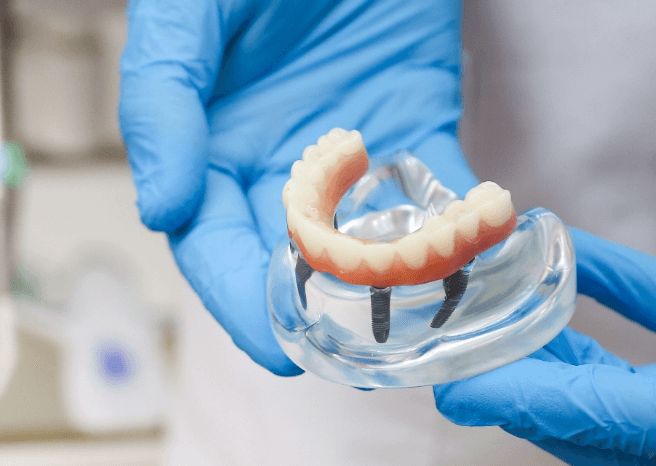
The All-on-4 technique uses four strategically placed implants to support a complete arch of replacement teeth. This approach often eliminates the need for
bone grafting, reducing treatment time and cost. All-on-6 restorations use six implants for additional support, beneficial for patients with stronger bite forces.
Implant-Supported Overdentures
Implant-supported overdentures attach to implants but remain removable for cleaning. This option provides improved stability compared to conventional dentures while maintaining removability. Two to four implants typically support an overdenture, with special attachments allowing the denture to snap onto the implants.
Patients with limited bone structure or budget constraints often benefit from implant-supported overdentures. The implants prevent continued bone resorption while the removable design facilitates thorough cleaning.
Materials Used in Dental Implant Restorations
Porcelain and Ceramic
Porcelain and ceramic materials provide excellent aesthetics for implant restorations, particularly for front teeth where appearance is paramount. These materials mimic the translucency and color depth of natural tooth enamel, creating restorations virtually indistinguishable from surrounding teeth.
All-ceramic restorations eliminate the metal substructures used in traditional crowns. This design choice improves aesthetics by preventing the dark lines sometimes visible at the gumline with metal-based restorations.
Zirconia
Zirconia represents one of the strongest materials available for dental restorations, making it ideal for posterior teeth experiencing significant chewing forces. This ceramic material resists fracture while still providing good aesthetics.
Full-contour zirconia restorations are milled from solid blocks of material, offering exceptional strength and durability. Recent advances in zirconia technology have improved translucency, making these restorations more aesthetic than previous generations.
Porcelain-Fused-to-Metal
Porcelain-fused-to-metal restorations use a metal substructure for strength with porcelain layered over visible surfaces. While newer all-ceramic options have largely replaced these for front teeth, porcelain-fused-to-metal still performs well for implant-supported bridges requiring maximum strength.
Benefits of Dental Implant Restorations
Restored Function and Comfort
Dental implant restorations restore your ability to eat comfortably without dietary restrictions. Unlike removable dentures that limit food choices, implant-supported restorations handle tough, sticky, or crunchy foods with ease. The fixed nature of most implant restorations eliminates concerns about shifting or clicking while eating or speaking.
Speech clarity improves dramatically with dental implant restorations compared to traditional dentures. Fixed restorations don’t shift during talking, eliminating slurred speech or clicking sounds some denture wearers experience.
Aesthetic Improvement
Dental implant restorations create natural-looking smiles that boost confidence in personal and professional interactions. Custom color matching ensures restorations blend seamlessly with remaining natural teeth, or creates an entirely new smile in the case of full-arch restorations.
Facial aesthetics improve as implant restorations provide proper support for lips and cheeks. Missing teeth cause facial collapse over time as bone resorbs. Replacing missing teeth with implant restorations maintains facial contours and supports a more youthful look.
Long-Term Oral Health Benefits
Dental implants prevent the bone loss that inevitably follows tooth loss. When teeth are missing, the jaw bone gradually resorbs due to lack of stimulation from chewing forces. Implants transfer these forces into the bone, maintaining bone structure.
Implant restorations don’t require alteration of adjacent healthy teeth, unlike traditional bridges. Preserving natural tooth structure contributes to better long-term oral health outcomes.
Caring for Your Dental Implant Restorations
Daily Oral Hygiene
Maintaining dental implant restorations requires similar care to natural teeth. Brush at least twice daily using a soft-bristled toothbrush and non-abrasive toothpaste. Pay particular attention to the areas where restorations meet gum tissue, as plaque accumulation here can cause inflammation.
Flossing around implant restorations removes food particles and plaque from between teeth and at the gumline. Special floss threaders or interdental brushes help clean under implant bridges where regular floss cannot reach.
Professional Maintenance
Regular
dental check-ups allow Dr. Dbouk to monitor your implant restorations and surrounding tissues. Professional cleanings remove calculus that home care cannot eliminate, preventing peri-implant disease. Most patients benefit from cleanings every six months.
During maintenance appointments, Dr. Dbouk examines implant restorations for signs of wear, loose components, or other issues requiring attention. Early detection of problems allows simpler interventions before complications develop.
Protecting Your Investment
Avoiding excessive forces protects both natural teeth and implant restorations. If you grind or clench your teeth, a custom nightguard distributes forces evenly and prevents damage. This protective appliance represents a small investment compared to the cost of repairing damaged restorations.
Tobacco use negatively impacts implant success rates and should be avoided. Smoking impairs healing, increases infection risk, and contributes to peri-implant disease.
Cost Considerations for Dental Implant Restorations
The cost of dental implant restorations varies based on restoration type, materials selected, and how many teeth require replacement. Single tooth restorations generally cost less than bridges or full-arch restorations. Dr. Dbouk’s team provides detailed cost estimates during your consultation.
Investment in dental implants and restorations often proves more cost-effective long-term compared to traditional alternatives requiring periodic replacement. This longevity, combined with benefits like bone preservation, makes implants economically sound.
Many dental insurance plans provide partial coverage for implant restorations. Coverage varies significantly between plans. Our office team works with you to maximize insurance benefits and understand your out-of-pocket expenses. Flexible payment options help make dental implant restorations accessible.